Chalazion Relief
Revive Your Comfort. Restore Your Confidence
What You’re Dealing With?
Not Just “A Lump on the Eyelid.”
Here’s What a Chalazion Really Is.
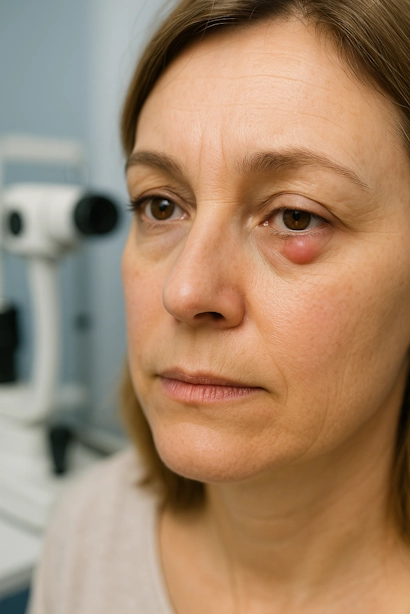
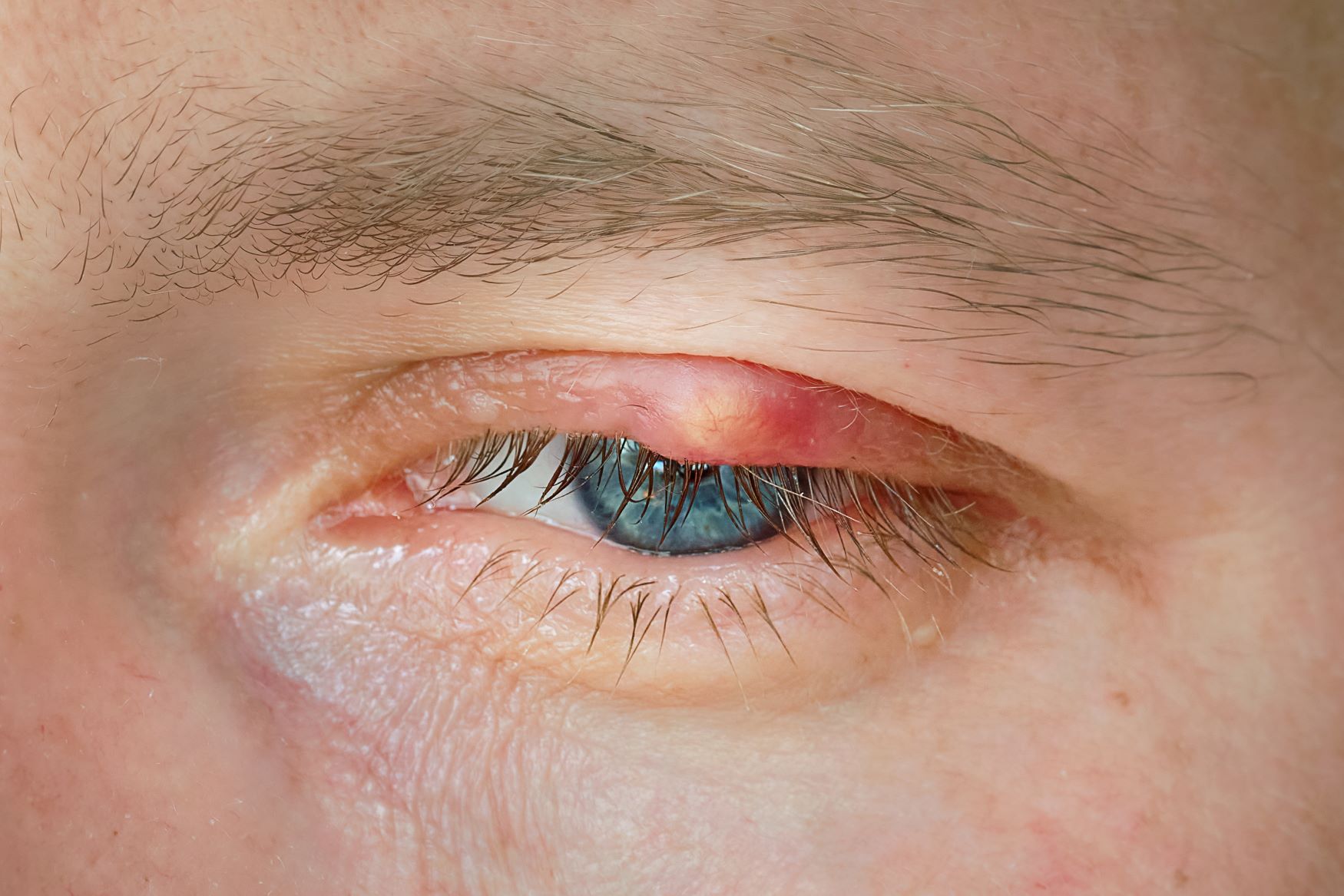
A chalazion is a small, raised, usually painless lump caused by a blocked Meibomian gland. While it may start as a tender swelling, it often becomes a firm, slow-growing bump over a few days.
For many patients, the main concern is cosmetic. For others, inflammation makes it sore—and if it grows large enough, it can press on the cornea, causing blurred vision.
Most chalazia clear on their own… but when they don’t, they can lead to more serious issues such as preseptal cellulitis. That’s when specialist care becomes essential.
Symptoms & When to Get Help
- A painless lump in upper or lower lid
- Local swelling or mild irritation
- Tearing
- Blurred vision from pressure on the eye
- Recurrent episodes, especially in adults aged 30–50
If it’s been more than a month, or it keeps coming back, it’s time for expert evaluation.
Treatment Options
Safe. Specialist. Tailored to Your Stage & Symptoms.
Your treatment depends on whether your cyst is simply blocked or has become infected. At The Dry Eyes Clinic, we take a step-by-step, evidence-based approach:
1. Conservative Home Care
For early or mild chalazia:
- Warm compresses (10–15 min, 4–6 times daily)
- Gentle daily lid massage
- Good lid hygiene
- Pharmacy-provided antibiotic ointment (if advised)
Many chalazia resolve within a month using home care alone—but if it lingers, it’s time to step in.
2. Steroid Injection (Kenalog)
A Kenalog injection into the cyst reduces inflammation quickly.
- Usually improves within 1–2 weeks
- Leaves only a small residual lump, which fades with time
- Infection must be treated beforehand
- May cause a temporary pale skin patch in the area
3. IPL Treatment (If Recently Formed)
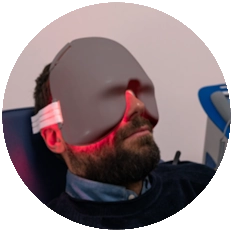
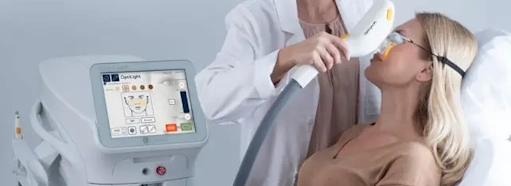
For newer cysts, Intense Pulsed Light (IPL) can help clear the blockage and reduce inflammation—especially useful in patients with underlying MGD or rosacea.
4. Incision & Curettage Surgery
For larger, long-standing, or stubborn chalazia:
- Local anaesthetic to numb the eyelid
- A tiny incision on the inside of the lid (so no visible scar)
- The cyst and cavity are drained and cleaned
- Lid may be patched for up to four hours
- No driving that day
- Healing typically takes a few weeks
- Results can be visible immediately, or improve gradually over days
This is a straightforward, highly effective procedure carried out with precision and care.
Why This Happened.
A Chalazion Is a Symptom — Not the Whole Story.
Chalazia often stem from Meibomian Gland Dysfunction (MGD) or blepharitis. When the glands don’t produce healthy oil, blockages form, leading to cysts. Inflammation, rosacea, and even infections can make things worse.
Recurring chalazia are a sign that the underlying gland dysfunction needs long-term attention.
Stye vs Chalazion (The Confusion Explained)
People often mix up the two:
Stye (Hordeolum):
-
- Infection of the gland
- Red, swollen, painful
- On the edge or inside the eyelid
- Can turn into a chalazion if untreated
- Usually not an infection
- Firm, painless lump
- Caused by blocked oil gland
- Develops more slowly
- Sits deeper within the lid
Either way, please don’t “pop” it — that never ends well
Preventing Future Chalazia (The Long-Term Plan)
Healthy Oil Glands = Fewer Blockages.
To reduce the risk of recurrence you should:
- Warm compresses and massage (regularly)
- Good lid hygiene
- Avoid touching your eyes
- Remove makeup nightly
- Replace eye makeup every 3 months
- Specialist treatments such as:
- Meibomian gland probing
- IPL therapy
- Low-Level Light Therapy (LLLT)
These improve gland function and help prevent repeated cyst formation.